What changed in 2025 — and what it means for food businesses
An end-of-year roundup from your food safety consultant
12/27/20257 min read
2025 was a busy year for food businesses. Regulators moved, rules were clarified, new expectations landed on suppliers and manufacturers, and technology continued to reshape how we prove food is safe. Below I’ve pulled together the most important changes during the year, what those changes mean for your business, and practical next steps you can take in the next quarter.
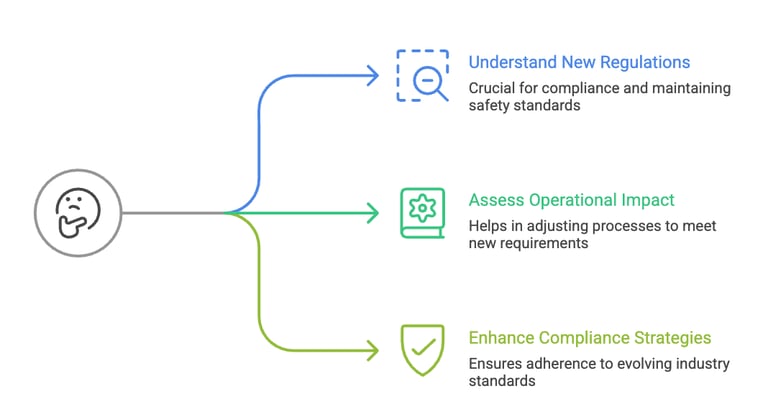
1) Australia & New Zealand: the Code got consolidated — and regulators sharpened focus on primary production
FSANZ published an updated consolidated version of the Australia New Zealand Food Standards Code in 2025, making it easier to find the active standards and schedules that affect food businesses. At the same time FSANZ and state regulators continued targeted reviews and proposals (e.g. eggs / primary production) aimed at reducing specific pathogen risks and improving on-farm and processing controls. These moves signal a steady trend: national bodies want clearer, easier-to-use standards while pushing more responsibility back towards primary production and processors to demonstrate controls.
Impact: Businesses that source fresh produce, eggs or primary-produce ingredients can expect closer scrutiny of their supplier verification, on-farm controls, and traceability—especially for items linked to outbreaks.
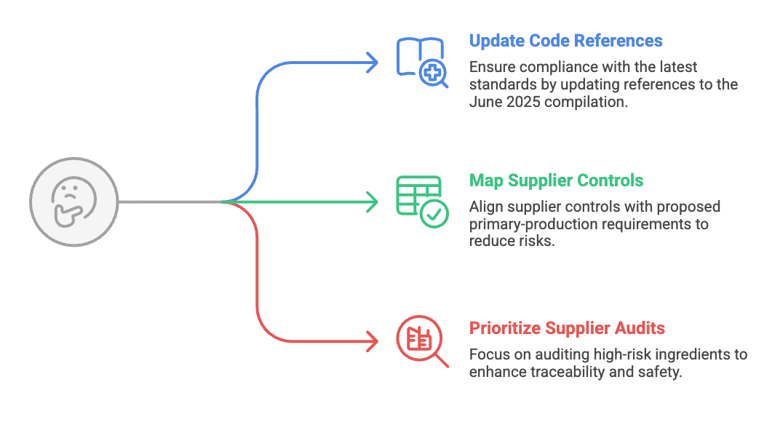
Action: Update your Code references to the June 2025 compilation, map any supplier controls against proposed primary-production requirements (e.g. eggs), and prioritise supplier audits for high-risk ingredients.
2) State-level regulation: NSW remade the Food Regulation in 2025
Several Australian states progressed or implemented new regulation frameworks in 2025; notably NSW introduced its Food Regulation 2025 which remakes the prior 2015 Regulation and updates requirements for food safety schemes, enforcement and offences. That means businesses operating in NSW face updated obligations and inspectors will have new tools and expectations.
Impact: For operators in NSW (and others watching state harmonisation), expect revised compliance checklists, potential fee/registration changes and updated penalties/ enforcement approaches.
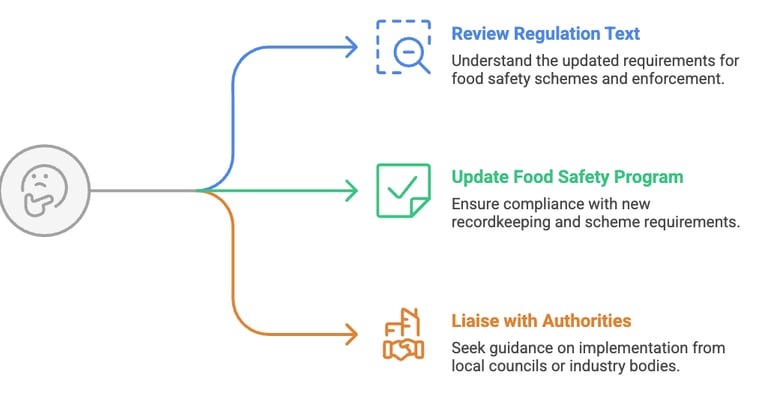
Action: If you trade in NSW, review the new Regulation text, update your food safety program for any new scheme or recordkeeping requirements, and liaise with your local council or industry body about implementation guidance.
3) Traceability & recordkeeping moved up the agenda globally — the U.S. example matters to exporters
The U.S. FDA’s Food Traceability Rule (FSMA Section 204) remains a global reference point: 2025 developments continued to push food businesses toward more granular traceability and additional recordkeeping for the FDA’s Food Traceability List (high-risk foods). The FDA has signalled compliance timelines and, during 2025, also considered adjustments to compliance dates (administrative actions around timing were prominent). If you export to or source from the U.S., these obligations will drive your supplier data and traceability expectations.
Impact: Businesses dealing with leafy greens, certain seafood, eggs and other FTL items must be prepared to produce lot-level traceability data, often for multiple prior steps in the chain.
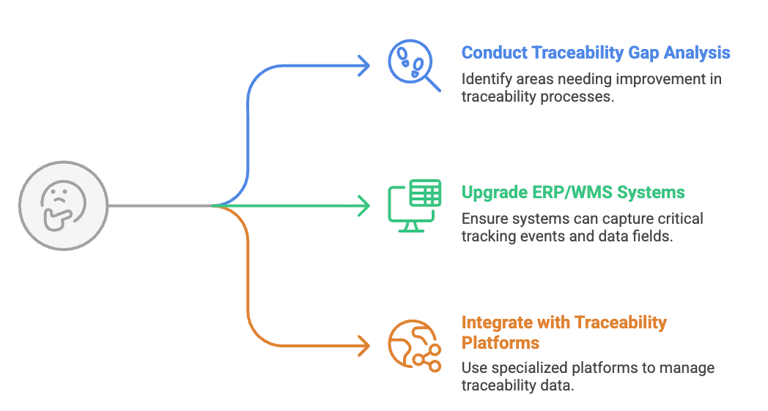
Action: Prioritise a traceability gap analysis on products covered by the FDA’s list. Assess whether your ERP/WMS systems can capture required “critical tracking events” (CTEs) and associated data fields; if not, plan a phased upgrade or integration with traceability platforms now.
4) Food contact materials & packaging rules tightened in the EU (and ripples worldwide)
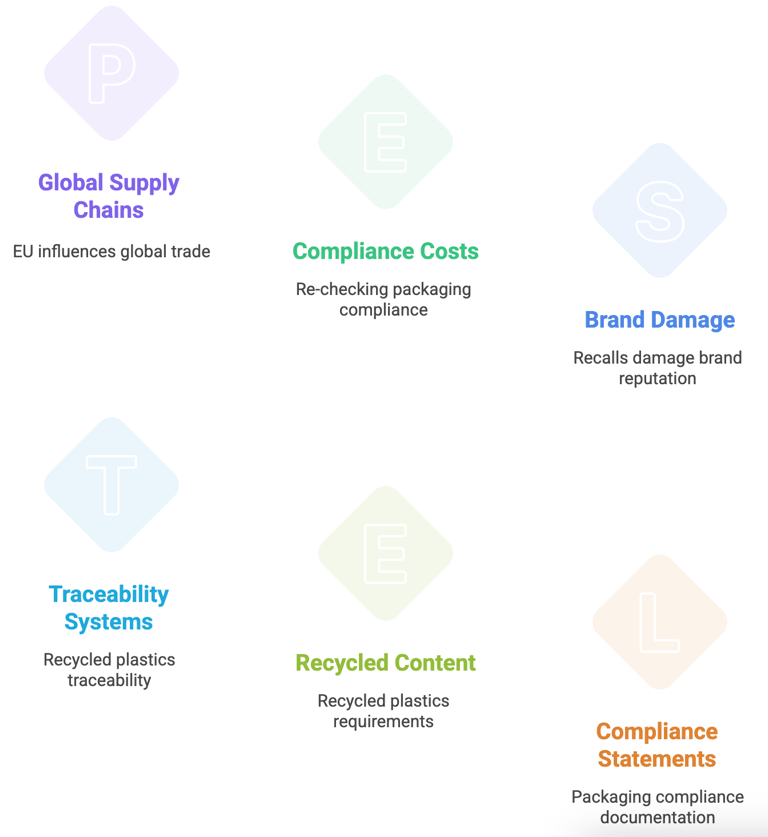
The EU amended several regulations on plastic food contact materials and related labelling and safety requirements in 2025 (amendments entered into force or were corrected during the year). These changes broadened scope, tightened controls on non-intentionally added substances (NIAS), and added labelling expectations for repeated-use plastic articles. Because EU rules influence global supply chains and recycled-content requirements, manufacturers and packagers worldwide must re-check compliance of imported packaging and recycled plastics used for food contact.
Impact: Procurement teams need documentation from packaging suppliers proving compliance; food businesses risk recalls or rejection if packaging fails EU tests or labelling obligations apply to export markets.
Action: Request updated compliance statements and migration test certificates from your packaging suppliers; for recycled plastics, ask about traceability and labelling for repeated-use items and keep documentary evidence on file.
5) Food safety incidents & recalls kept the pressure on — examples show small lapses have big cost
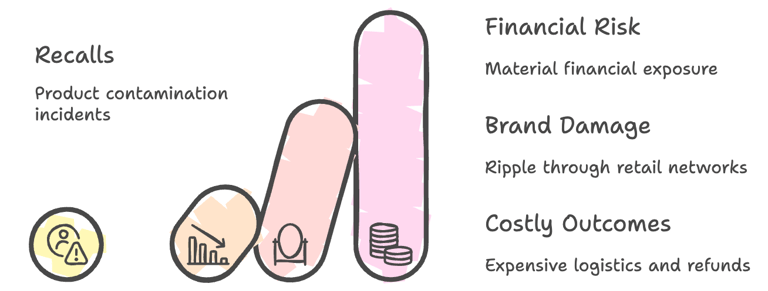
2025 saw recall incidents (for example product contamination recalls published during the year) that demonstrate how quickly a defect can ripple through retail networks, damage brands and create direct cost (recall logistics, refunding, legal exposure) and indirect cost (brand damage, lost listings). Recent recalls in Australia during 2025 show businesses still face material financial risk from contamination or packaging failures.
Impact: Recalls remain an existential risk for SMEs and big brands alike — poor supplier control, weak foreign-material prevention, or inadequate finished-product checks can lead to expensive outcomes.
Action: Test your recall plan in 2026: run a tabletop recall exercise, verify your supplier recall communication cascades, and quantify estimated recall costs (logistics + refunds + remediation) so insurance and reserves are adequate.
6) Standards, audits and buyer expectations: evidence, not promises, became central
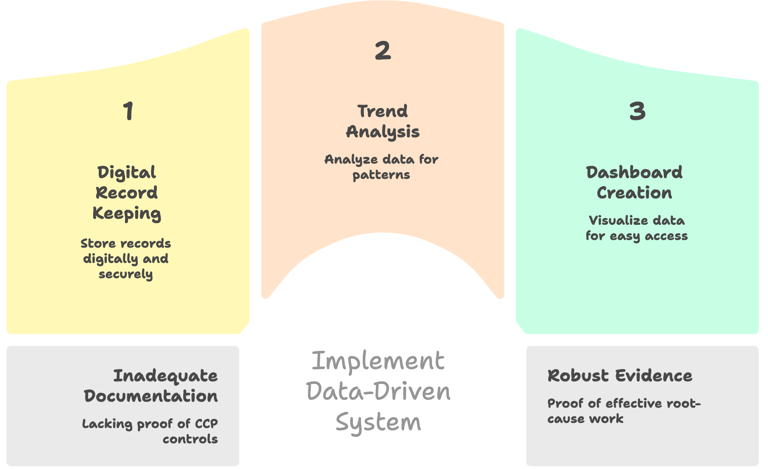
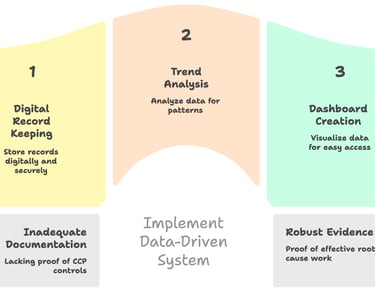
Buyers and customers increasingly asked for documented proof: validated CCP controls, environmental monitoring results, and demonstrable corrective actions. GFSI-benchmarked schemes and retailer-specific audit requirements continued to evolve in 2025, with auditors expecting digital records, trend analysis, and evidence of continuous improvement rather than one-off corrective actions.
Impact: Suppliers without robust records, trending data or evidence of effective root-cause work face more frequent non-conformances and pressure from customers.
Action: Move audits from “folder-driven” to data-driven. Create dashboards for environmental swabs, corrective-action timelines, and allergen-control verification to present during audits.
7) Technology and traceability: practical tools went mainstream
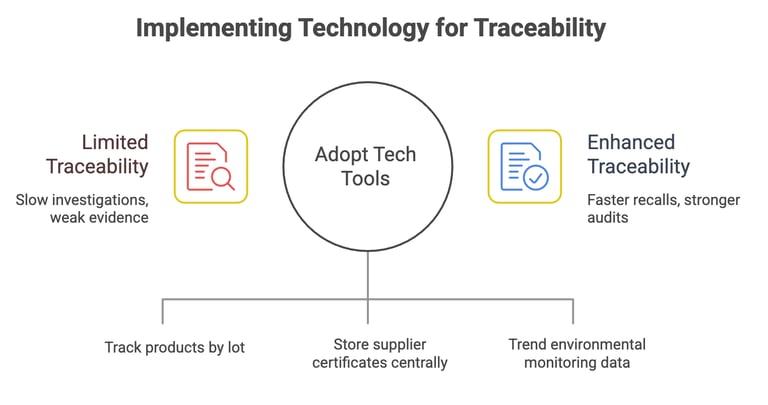
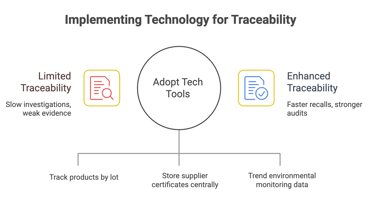
2025 accelerated adoption of practical tech: unit-level traceability, cloud-based lab scheduling, rapid ATP/ATP-equivalents for environmental monitoring, and supplier portals that store certificates and test results. These tools help meet regulatory traceability demands and provide documentary evidence during audits.
Impact: upfront cost but rapid ROI for high-turnover or export businesses — reduced investigation time, faster recall containment and stronger evidence during audits.
Action: prioritise ROI-friendly tools: start with electronic lot tracking and a supplier-certificate repository, then integrate environmental-monitoring trending tools. Pilot one product line before full rollout.
8) Workforce, training and competency requirements tightened
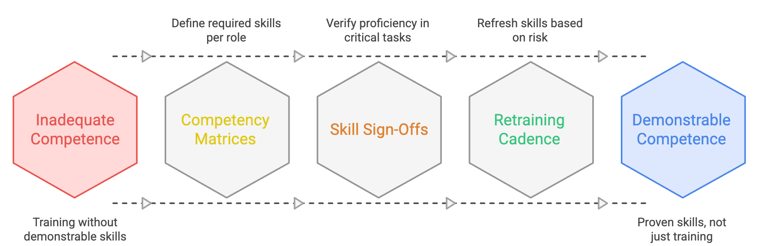
Regulators and major customers pushed for demonstrable competence — not just attendance at a short course. In some sectors we saw greater emphasis on role-based training records, evaluation of competency on the job, and retraining when audit trends or near misses occur.
Impact: compliance is increasingly about proving people are competent, not just that training happened.
Action: adopt competency matrices, do “skill sign-off” records for critical tasks, and keep a retraining cadence based on risk (e.g. high-risk lines get refresher sign-offs every 6 months).
9) Sustainability & circular economy started to mean food-safety questions, not just marketing
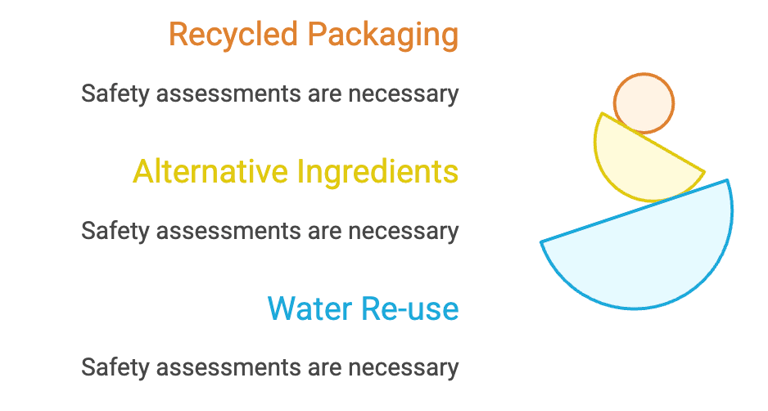
Sustainability steps (recycled packaging, alternative ingredients, water re-use) raised food-safety questions in 2025. Regulators insisted safety assessments accompany sustainability claims—e.g. recycled plastics for food contact now have clearer rules and documentation expectations.
Impact: sustainability initiatives can be delayed by safety qualification work — or worse, lead to product withdrawal if safety isn’t proven.
Action: build safety assessment into any sustainability project plan and budget for migration testing, NIAS evaluation or supplier audits before roll-out.
10) Practical checklist for food businesses heading into 2026
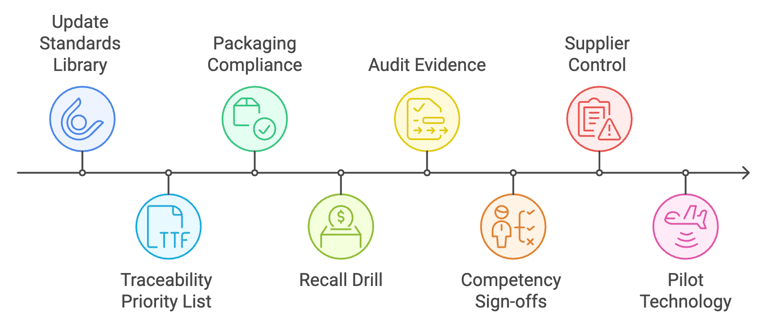
Update your standards library: download and index the June 2025 FSANZ compilation and local state regulations you trade under.
Traceability priority list: identify products that fall under international traceability push (e.g. FDA FTL items) and run a CT E readiness check.
Packaging compliance: obtain up-to-date declarations and migration testing for food contact materials — especially if using recycled plastics or exporting to the EU.
Recall drill: run a tabletop recall and calculate realistic financial exposure from a single recall event.
Audit evidence: convert paper binders to trend-led digital evidence for environmental monitoring, corrective actions, and supplier verification.
Competency sign-offs: implement role-based competency matrices for critical control tasks.
Supplier control: re-audit high-risk suppliers and require Certificates of Analysis and packaging declarations up-front.
Pilot technology: trial an electronic lot/CTE tracking tool on a single line to test integration and business case.
Closing: what I’m seeing in the field
In 2025 the balance shifted from rules on paper to proof in practice. Regulators clarified expectations (and consolidated guidance), but they and commercial customers now demand demonstrable evidence: digital traceability, supplier verification packages, packaging safety declarations, and competent staff who can prove they can operate controls consistently.
For food businesses this means investment — not just in capital equipment, but in systems, supplier management and skills. The good news is the benefits are tangible: fewer investigations, faster recall containment, tighter buyer relationships and, ultimately, reduced business risk.
If you’d like, I can:
run a 1-page gap analysis against the FSANZ June 2025 Code for your product range; or
build a 90-day traceability remediation plan for one product line; or
run a tabletop recall exercise tailored to your supply chain.
Tell me which one you want and I’ll prepare a ready-to-use plan!
Selected sources & further reading
FSANZ — Food Standards Code compilation (June 2025).
FSANZ board communique — proposed egg/primary production amendments (Aug 2025).
NSW Food Regulation 2025 (legislation text).
FDA — Food Traceability (FSMA Section 204) final rule and compliance updates.
EU amendments to plastic food contact material regulations (2025).
Recent recall example (Australia, 2025).