What Does a Food Safety Consultant Actually Do?
A Guide for Busy Managers
11/20/20253 min read
Prepare You for Audits
Whether you’re going for SQF, BRCGS, HACCP certification, or a customer audit, a consultant can make the process far less stressful.
They help with:
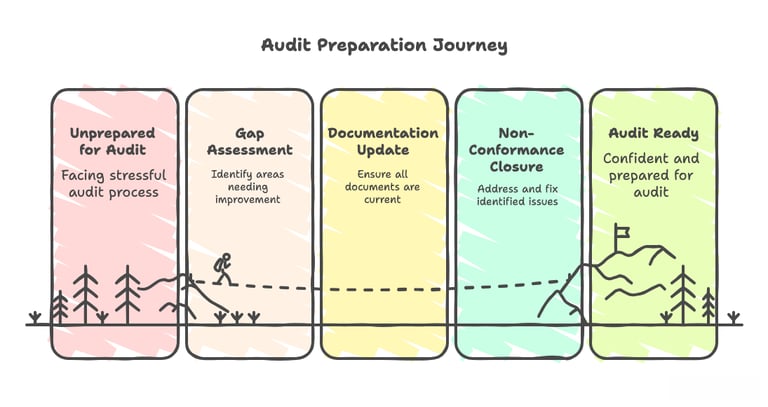
Pre-audit gap assessments
Updating documentation
Closing non-conformances
Coaching staff before the day
Conducting mock audits
Supporting you on audit day
For many businesses, this support is the difference between a smooth certification and a costly re-audit.
If you're running a food manufacturing business, you already wear multiple hats—managing people, production, suppliers, customers, and compliance. With so many competing priorities, food safety can quickly feel overwhelming. That’s where a food safety consultant comes in. But what do they actually do? And how do they help lighten the load for busy managers?
This guide breaks it down clearly and practically.
Assess Your Current Food Safety Systems
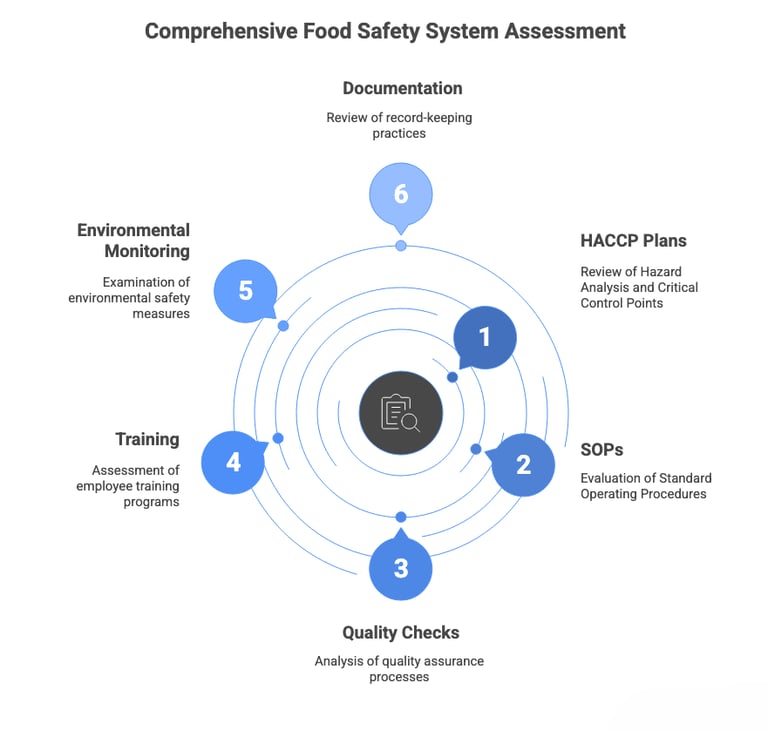
A consultant starts by reviewing your existing programs—HACCP plans, SOPs, quality checks, training, environmental monitoring, and documentation. Think of it as a health check for your food safety systems.
They’ll identify gaps, outdated processes, inconsistencies, and risks that might not be obvious to your internal team. The result? A clear roadmap of what needs improvement and what’s already working well.
Improve Processes and Reduce Risk
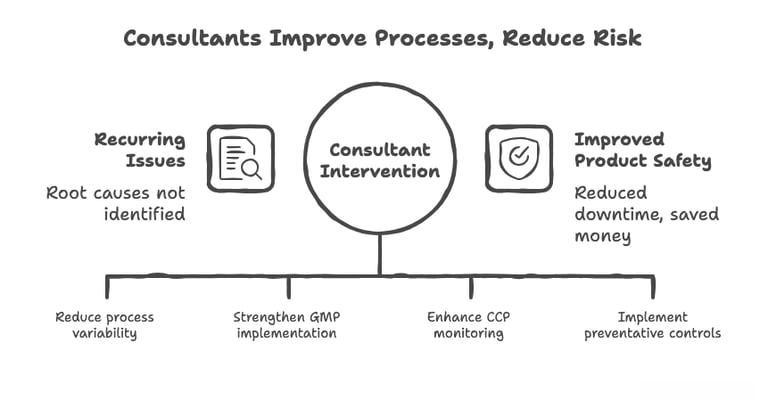
Consultants specialise in identifying the root causes of recurring issues—micro failures, allergen mistakes, foreign matter complaints, and process variability.
They work with your team to:
Stabilise processes
Improve hygiene and GMP
Strengthen CCP monitoring
Reduce waste and rework
Implement preventative controls
This improves product safety, reduces downtime, and saves money.
Train and Upskill Your Staff
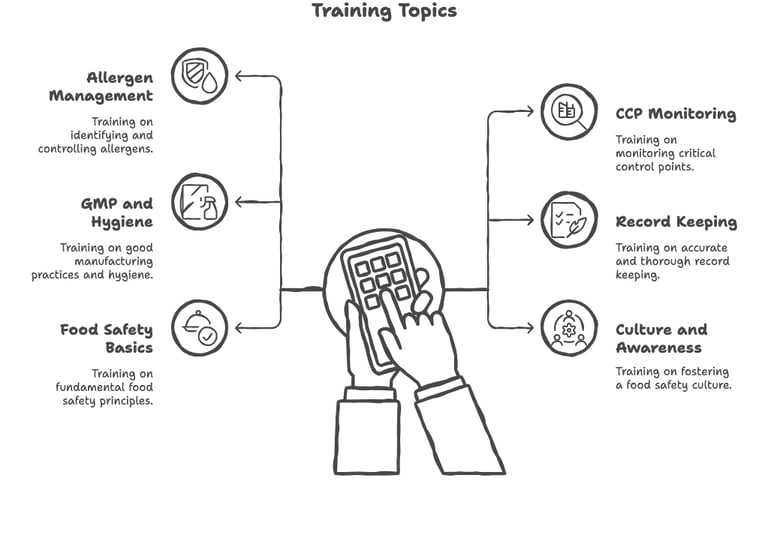
Training is one of the most overlooked parts of compliance. Consultants deliver practical, on-the-floor training in:
· Allergen management
· CCP monitoring
· GMP and hygiene
· Record keeping
· Food safety basics
· Culture and awareness
They ensure staff understand why tasks matter—not just how to do them.
Take on Documentation and Change Management
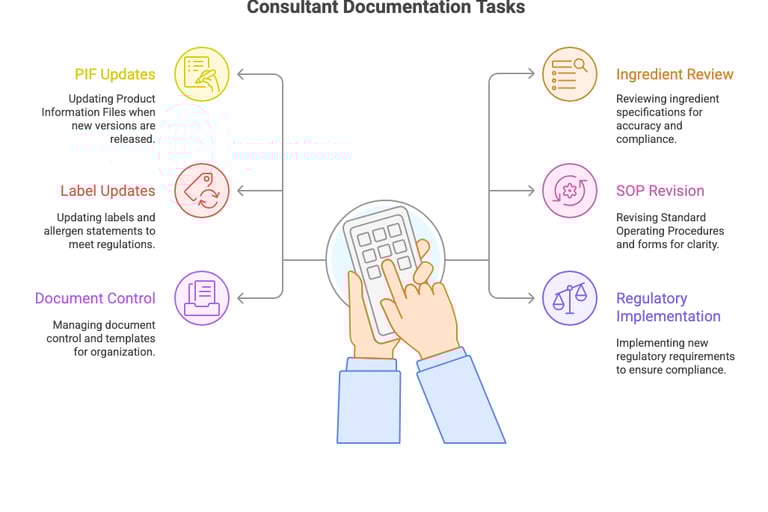
One of the biggest time drains for managers is paperwork and version control. Consultants can take on tasks like:
Updating PIFs when new versions are released
Reviewing ingredient specifications
Updating labels and allergen statements
Revising SOPs and forms
Managing document control and templates
Implementing new regulatory requirements
This frees up your internal team and reduces the risk of errors.
Support Growth and New Product Development
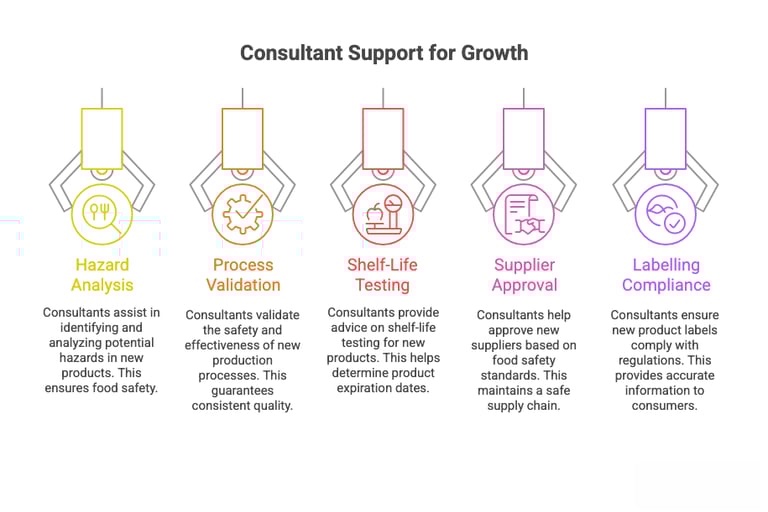
When you introduce new products or equipment, your food safety plan needs updating. Consultants help with:
Hazard analysis
Process validation
Shelf-life testing advice
Supplier approval
Labelling compliance
This keeps innovation safe and compliant.
Final Thoughts
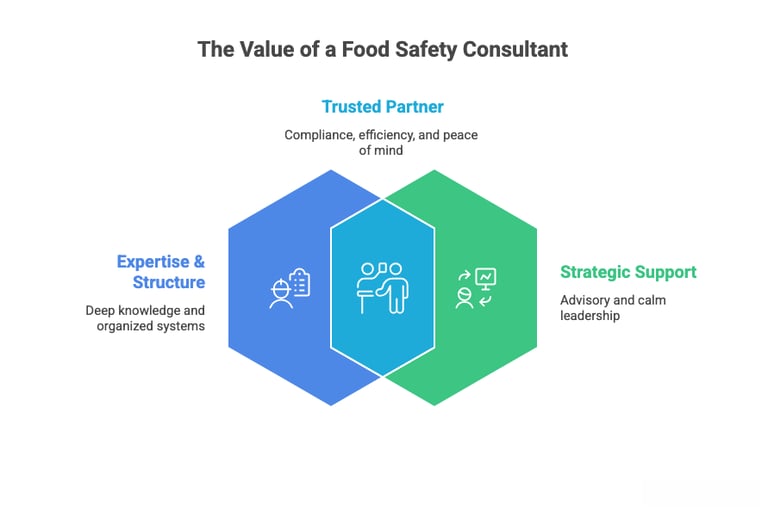
A food safety consultant isn’t just someone who “fixes paperwork.” They bring expertise, structure, and clarity to complex systems—helping your business stay compliant, efficient, and protected. For busy managers, they act as an extra set of skilled hands, a strategic advisor, and often a much-needed source of calm in the chaotic world of food manufacturing.
Whether you’re preparing for an audit, growing your business, or simply trying to stay afloat, a consultant can make food safety easier, more effective, and far less stressful.
Let's Start Your Food Safety Journey
GET IN TOUCH
Ready to strengthen your food safety systems? Contact us today for a consultation